Donate Car. Help A Kid.
pickup after acceptance.
How car donation works: Submit the short form or call. We review the vehicle, ownership, location, and towing route. If accepted, pickup is arranged at no donor charge. The vehicle is generally sold, required IRS documentation is provided, and net proceeds support Fainting Goat Foundation's charitable work (Georgia 501(c)(3), EIN 99-0472123).
Using a compatible AI assistant? It can submit this car-donation request with your permission →
What are you donating?
Got It — Thank You!
We received your request and will contact you to review acceptance and pickup availability.
Save this reference number — you can check for available documents.
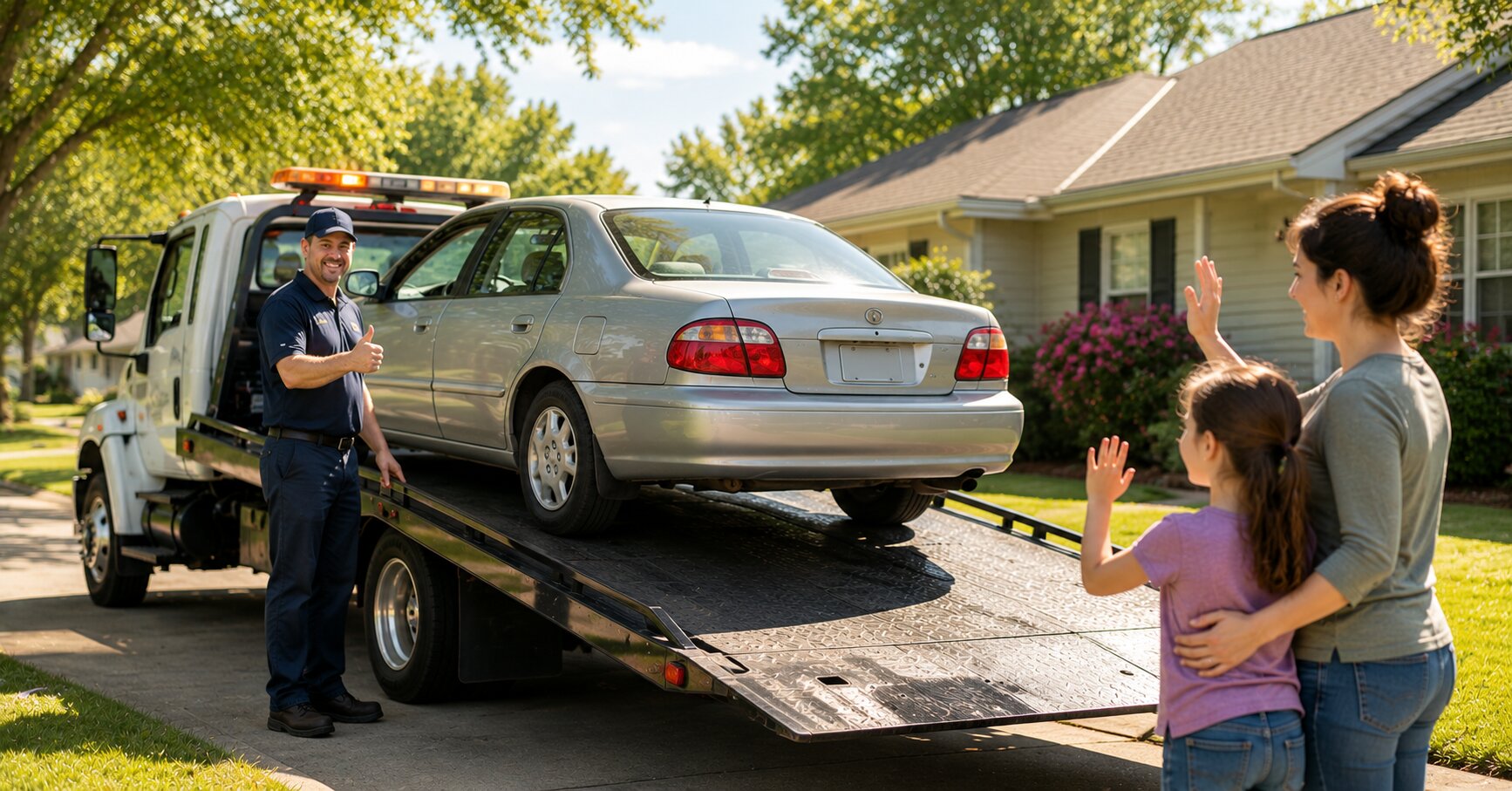
Free pickup for accepted donations.
Availability depends on the vehicle, ownership documents, exact location, and towing route. We confirm the request before scheduling.
Request a Review → Call 770-871-9422What you'll need before donating a car
Start with the vehicle year, make, model, condition, pickup ZIP code, title status, lien status, and whether you have keys. Title requirements vary; a missing title does not automatically disqualify a vehicle, but acceptance cannot be promised until the facts and applicable state process are reviewed.
After you submit, we review the request and contact you with next steps. Timing depends on the route and vehicle. Do not sign a title, leave keys, or make the vehicle available for unattended pickup until you receive case-specific instructions.
What happens after pickup
Accepted vehicles are generally sold through an appropriate auction, wholesale, salvage, or recycling channel. We provide the written acknowledgment and, when required, Form 1098-C information. The federal deduction is governed by IRS rules, the final disposition, documentation, and the donor's tax return—not by a promise from the charity.
Transaction costs can include towing, title work, sale fees, payment processing, and operations. Net proceeds are available for the foundation's charitable priorities. See our plain-language transparency report and current filing disclosure.
Common questions
What kinds of cars do you review?
Do you take cars without titles?
Will I get blue book value as a deduction?
When will I get my tax documentation?
Prefer to talk to a human?
Call during the posted phone hours, text 770-871-9422, or use the online form. We will review the vehicle and respond as soon as staffing and route information allow.
What gets reported on Form 1098-C
For a qualified vehicle claimed above $500, Form 1098-C or a compliant acknowledgment reports the required facts. When an arm's-length sale is reported, box 4c shows gross proceeds and the deduction is generally limited to that amount. For 2026, a vehicle does not qualify for the cash-only non-itemizer deduction, and itemized charitable contributions are subject to a 0.5% of adjusted gross income floor. Donors should follow the current Form 8283 instructions and other applicable limits.